The question of how many months a nail actually needs before you can call a product a win, or a waste of time, is exactly what kept me filling a pocket notebook for eight months instead of just guessing.
Quick disclosure before anything else: a couple of links below are affiliate links, and I earn a small commission if you buy through one. I only write about nail fungus testing I've run myself, notebook and camera included, not products a company mailed me for free.
Not a podiatrist, not a doctor, nothing close. Shift supervisor in the Atlanta suburbs is the more accurate title than any men's foot care expert — five years of hiding three ugly toenails, then running supplement tracking the same way I track pallet counts at work.
Before the Podiatrist, There Was the Drugstore Aisle
Rite Aid's own store-brand clotrimazole cream came first. Twice a day, morning and night, for about four months straight, rubbed into three nails that just sat there looking the same.
Nothing changed. When I finally sat in a podiatrist's office, she wrote me a stronger prescription topical, and I went through that one for another four months with the same result — the same three nails, no different than the day I started.
Look, that's eight months of daily effort between two products with nothing to show for it, and it's why drugstore creams get an eye-roll from me now. Ten hours a shift in steel-toe boots means feet that never fully dry out, and neither product touched that part of the problem at all.

Testing Kerassentials Instead of More Creams
Oil seemed worth trying because it actually has a chance of soaking into a toenail instead of just sitting on top of it the way most creams do. That's the whole reason I switched to Kerassentials after the second failure — oil-based, no pills, just a brush applicator.
Same spot at the kitchen table every Sunday, a small clip light hooked onto the edge so the lighting doesn't drift from one week's photo to the next, same background, same time of day, so one picture could actually be compared honestly against the last. The label on the oil doesn't promise anything before six to eight weeks in, so checking every single day was pointless — once a week matched reality a lot better than obsessing over it daily.
Whether a topical or a swallowed pill wins out long-term is a separate argument with its own notebook entry; for three visibly bad nails, I wanted to watch something work, not just trust that it was.
Dwayne Tillery, the forklift lead I work next to on nights, caught me writing dates in the notebook at the lunch table one night and wouldn't let it go — he's competitive about literally anything you can measure, so now he asks for updates like it's a stat line, under that flat fluorescent bar over the break room table that washes everyone out a little.
What Counts as Real Progress on a Nail?
Real progress doesn't show up as a sudden clean nail. It shows up first as a thin, pale line right where the skin folds over the base of the nail, near the cuticle, pushing the damaged part forward instead of curing it in place.
The photo never quite caught it, but pressing on it did. Standing at the sink one night out of habit, thumb against the nail, and it didn't give the way it used to — no spongy softness underneath anymore, just solid pushing back against my thumb, which told me more than any of the Sunday pictures.
How fast that clean line is supposed to move compared to what's normal is a whole separate log I keep. This piece is about the oil, not the math behind nail growth.
Picking a Format: Oil, Spray, or Pill
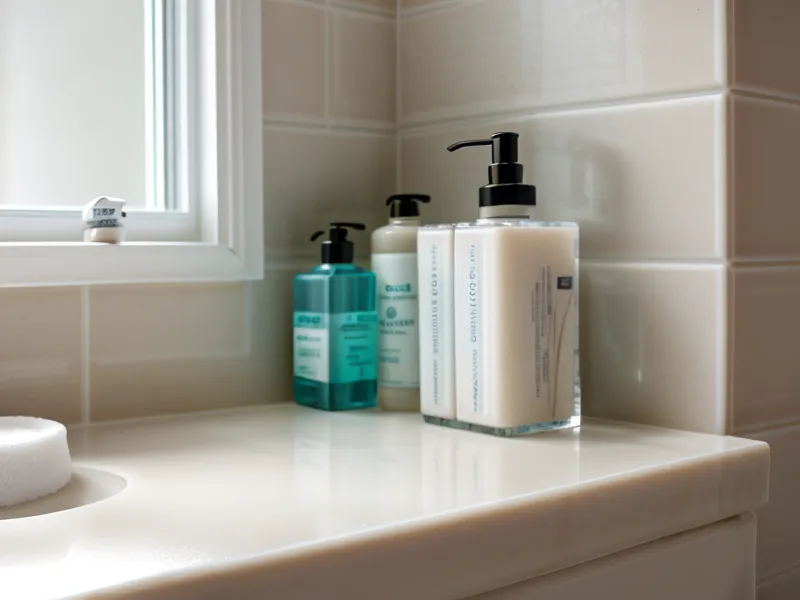
Three bottles ended up lined up on the ledge, newest one up front where I'd actually remember to use it: the Kerassentials oil, a bottle of ProNail Complex I tried on a different nail that had more redness around the edge than thickening, and a capsule bottle I never finished.
Spray format from ProNail felt less messy than an oil dropper, and the probiotic angle is a genuinely different approach than tea tree, worth a look if the skin around the nail is irritated and not just the nail plate itself.
Comparing two products head-to-head the right way — same nail, same timeframe, controlling for what skews it — is its own method I only partly followed here, mixing a few nails and formats instead of running one clean side-by-side.
Reading the actual ingredient list instead of the marketing page is worth doing before any order goes in, though what each ingredient supposedly does mechanically is a longer conversation than this one. Same with learning to spot the language a supplement page uses to oversell itself — that's a pattern worth studying on its own. For the blunt version of why most people quit before any of this has a chance to work, I put that together separately: why most nail supplements fail before the first trim.
The Boots Are Half the Battle
Warehouse floors don't care what's on your nails. Fifteen thousand steps some shifts, heavy boots the whole time, socks that stay damp past lunch — no oil or pill fixes an environment that's fighting against it all day.
Saturday mornings I'll head out to the boat ramp at Galt's Ferry on Lake Allatoona, and even that turned into a data point of sorts — wet shoes for a few hours straight, the same washed-out feeling in the nail afterward as a full shift in boots. Damp is damp, doesn't matter if it's sweat or lake water.
Keeping a second pair of socks in my bag to swap out at lunch made a bigger difference than expected, and the fuller routine for keeping fungus from coming back once you're clear is worth its own writeup rather than a paragraph here. For guys who can't stand the tea tree smell, I've also looked at Keravita Pro as a capsule option — working from the inside instead of a brush, though slower to show anything visible on the surface. However you track it, the actual mechanics of watching a clear line move up the nail get more coverage in watching the line of new growth.
Things This Notebook Doesn't Cover
A few things came up while testing that this piece won't settle. Whether a fungus pattern actually matches one of the recognized nail fungus types matters more than most guys assume, but sorting that out is its own topic. Trimming a thickened nail down without turning the whole toe into a mess is a skill nobody hands you for free, and it deserves more room than a sentence here. A couple of home remedies got tried before any of this — the usual internet suggestions — and none of them held up under actual tracking, which is a longer story on its own.
Diet gets brought up constantly in forums, sugar and carbs supposedly feeding the problem, and that's a claim worth its own writeup instead of a guess here. Laser treatment came up too, and whether it's worth the appointment is a fair question I've answered elsewhere, not in this one. Sticking with a routine past the point where it feels pointless is its own discipline problem, separate from whether the product itself even works. None of that touches the five years of skipped pool invitations and the general tiredness of hiding your own feet, which no oil or capsule fixes on its own.
Eight Months Later
Eight months of Sunday photos add up to a few blunt conclusions, and none of them are complicated. Consistency wins over strength — an oil applied every single night beat a "maximum strength" cream used every few days, by a wide margin. Dry feet win over any product — damp boots all day undoes whatever good the oil is doing. And the notebook itself turned out to be the real tool; on the days nothing looked different, flipping back three months gave me an honest answer instead of a frustrated guess.
Troy Hembree, a guy who found my tracking log and started running his own version of it, emails me every so often — methodical about the photos and dates, but he kept asking early on if there was a faster way to get results. There isn't. That's the whole and slightly annoying point of a notebook: it doesn't move any faster just because you're tired of looking at it.
Nails still carry a few ridges from five years of neglect, and that's not going anywhere regardless of what goes on them. But three toenails that used to be thick and yellow are thin, clear, and normal now, and Kerassentials is the one that actually earned a positive review in eight months of my own notebook — not a guarantee for anyone else's feet, just what happened with mine. Talk to an actual doctor before starting anything new, especially with circulation issues or diabetes; I'm just a guy with a pocket notebook and strong opinions.
For the longer version of getting from steel-toe boots back to actually wearing sandals again, that's a separate entry: moving from steel-toes to sandals, two years of trial and error condensed into one page.