Eight weeks. That's how long I dabbed tea tree oil from the health food store on Canton Road onto three yellow toenails with a cotton swab before admitting it wasn't doing a thing. Different bottle, same result as every other nail fungus supplement and home fix I'd tried — the fungus just sat there while I kept shoving my feet into the same warehouse boots every morning.
Quick disclosure before we get into it: I'm not a doctor or a podiatrist. I supervise a shift at a warehouse and keep a beat-up notebook of what I've tried on my own feet. This site runs on affiliate links — if you buy through one, I get a small commission and you don't pay extra for it. I only write about products I've actually put on my nails and logged on a Sunday. If your nail situation is getting worse, go see a real foot doctor before you take advice from a guy with a notebook.
Shoe Hygiene Was the Piece I Kept Skipping
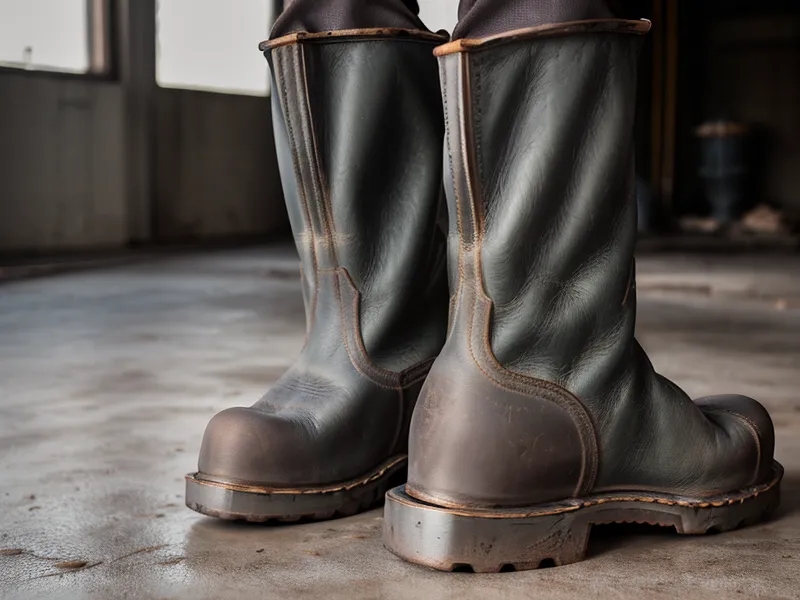
Look, the tea tree oil failure was never really about the tea tree oil. Three yellow nails don't happen in a vacuum — they happen because I was pulling on the same pair of boots after 12-hour shifts every morning, still damp from the day before, in Atlanta humidity that never lets anything dry out all the way. I could soak my toes in whatever I wanted at night. By the next morning I was putting them right back into the same warm, wet environment. That's a different problem than the one I covered in the piece on foot hygiene habits for guys who live in boots all day — this one is only about the shoe itself, not the whole routine.
A Home Depot Endcap and a Cheap UV Box
A UV shoe sanitizer sitting on an endcap at the Home Depot on Cobb Parkway in Smyrna is what got me thinking about the boots instead of just the nail. The idea is straightforward enough: germicidal UV light is supposed to kill fungus sitting inside the shoe, as long as the light actually reaches it. I picked one up on a whim, more curious than hopeful, and started running it every night before bed alongside the nail treatment I was already using.
My gym buddy Benny Kowalski thought it was ridiculous when I told him — a box that beams light at your sneakers — right up until I walked him through the logic. That's Benny. He won't buy into something on faith, but if the reasoning holds up he'll try it once. He had one ordered for his own gym shoes within the week.

Does the Light Actually Reach the Fungus?
Here's the deal: UV light only kills what it actually touches. It needs a clear line of sight to the spore, and warehouse boots are built with deep seams, thick stitching, and a removable insole that blocks off half the shoe from ever seeing the light. A reader named Nadira Osei — a nurse who'd been digging through treatment options for her father — wrote in and asked almost that exact question: if the light needs a direct line of sight, what happens to whatever is living under the insole or tucked in the stitching? Fair question, and it's the reason I stopped just dropping the light in the boot and walking away. Now I pull both insoles out every night and prop them up so the light actually reaches the parts that used to sit in shadow.
That's also why I never dropped the oil routine once the UV box showed up. Light can clean the environment at best — it doesn't do anything for fungus that's already sitting under the nail. I kept applying Kerassentials to the nail itself every night after the UV cycle finished, since the oil gets into the ridges and edges that light can't reach no matter how you angle the boot. Treating the shoe and treating the nail are two separate jobs, and skipping either one just slows down the other.
What Changed Around Week Eight
Sundays are photo day around here. I clip a small ring light to the edge of the kitchen table, line the same three nails up under it, and jot the date next to whatever I see in the notebook that lives on the windowsill by the sink, pen rubber-banded to the cover so it doesn't wander off. The supplement bottles sit behind it, newest one up front, so I don't lose track of what I started when.
About eight weeks into running the UV box every night and keeping up with the oil, I pulled my boots off after a shift and actually looked, instead of glancing and shoving my feet straight in the shower. The nail wasn't the flat gray-yellow it had been for months. It had gone a duller, thinner yellow, like whatever was under it had started giving up ground. Small thing. But small things are all you get with this stuff — patience with a fungal nail works a lot like waiting on a coat of paint to dry, nothing to see for a long stretch and then suddenly there's a line you can point to. I hadn't seen even that much from the tea tree oil in two full months of trying.
By the time I was several weeks past that point, the change had moved from maybe to something I could actually point at in the photos. There's more detail on how that played out on the toughest of the three nails in my notebook updates, but the short version is the new growth kept coming in lighter instead of turning yellow again halfway up the way it always had before. If you're dealing with more moisture than I was — sweatier feet, a job that keeps you standing in wet conditions all day — a spray format like ProNail Complex might be easier to work into a rushed morning than a dropper and brush.
Is a UV Box Worth Adding to the Kerassentials Routine?
None of this makes the fungus a quick fix. Skip treating the nail and only run the light, and you're leaving the fungus that's already living in the nail completely alone — clean boots do nothing for that part. Treat the nail but keep shoving it back into the same damp shoe every night, and you're just restarting the clock. I've logged hundreds of days of testing at this point, run through more home remedies than I want to admit to, and the UV box is the first thing that made the boots part of the equation instead of just the nail. It isn't glamorous. It's a light you run every night and insoles you have to remember to pull out.
If you want to try pairing something similar, start with a decent topical and a real way to dry your gear out, not a UV gimmick running on its own. The oil routine that's worked best for me through all of this is Kerassentials — you can check out the Kerassentials formula here and see if the timeline lines up with what you're dealing with. Wipe the brush applicator down after every use, too. It gets gummy fast if you skip it, and there's no point sanitizing your boots every night if the applicator touching your nail is filthy.